
Are Mining Companies Too Risk-Averse?
‘It’s gravy train time right now’

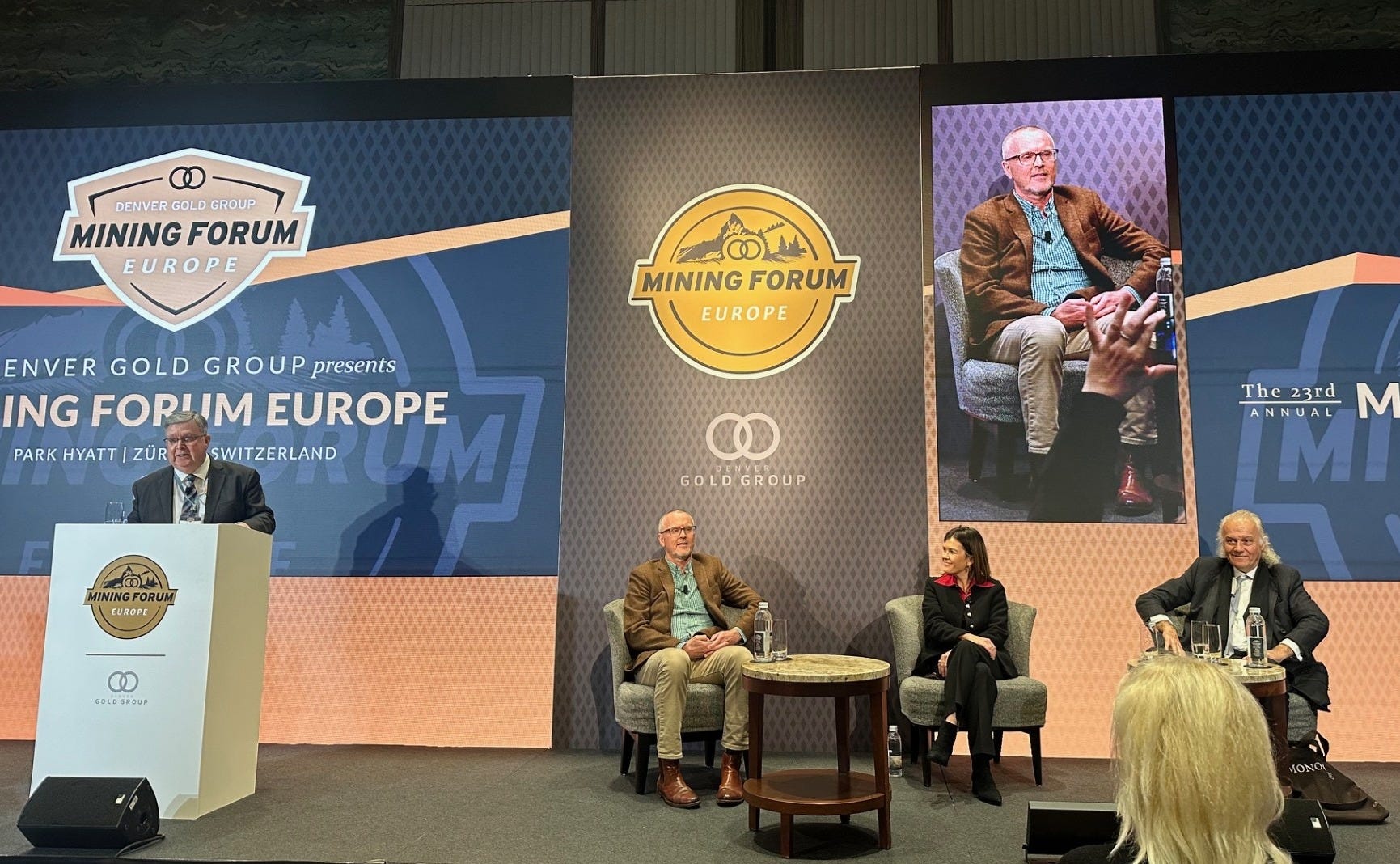
A panel discussion during the 2026 Mining Forum Europe in Zürich considered whether mining company boards were too scared to make bold moves.
Perhaps scarred by the memories of the previous cycle, there hasn’t been huge increases in capital expenditure, mergers and acquisition or exploration.
Cupel Advisory Corp’s Neil Adshead said he hadn’t seen any “crazy, head-scratching M&A” in the current cycle.
“What’s strange is that it’s almost like the miners don’t believe in the current gold price,” he said.
“The gold prices they use in the reserve estimates and in their feasibility studies are almost half of what the gold price is.”
Adshead noted there had been rampant cost inflation and a blowout in project permitting timeframes.
“I think that’s one reason, and maybe there’s another reason is that there’s a lot of inertia, maybe in management teams and boards who are sitting on $5, $10, $20 million of paper, and they’re all sitting there with big wins right now,” he said.
“Do they really want to take the risk and put $3-5 billion into a big project somewhere that might pay in 10 years’ time? I think there’s a little bit of that.
“Actually, there’s a bit of inertia in the current management teams that it’s gravy train time right now. They’re all making piles of money. Everyone’s shareholders are happy with them. Why take on the big risk?”
Jefferies global head of equity strategy Chris Wood said most generalist fund managers were completely ignorant about the gold mining sector.
“I would say by the middle of last year, most general fund managers didn’t know what Agnico Eagle was,” he said.
“If they knew about two gold mining stocks globally, they knew Newmont and Barrick, and they’ve obviously been pretty disastrous in recent years, so there was this general desire not to get involved with gold mining stocks.
“Also, there was the memory of the previous cycle, which peaked in 2011 where there was massive capital misallocation.
“Personally, I think it’s great that the big mining companies are not committing to big capex, and that’s exactly what the fund managers think. The fund managers don’t want to see big mining companies commit to aggressive capex.”
Adshead said it was hard to think of a major copper mine being built right now.
“I just think a lot of a lot of boards are sitting there, and they’re kind of scared to spend billions of dollars to build this 0.3-0.4% copper asset, 4000m up in the Andes with a dodgy Peruvian or Chilean government,” he said.
“I just think there’s fear, a bit of scaredness, in the boardrooms, and nobody’s brave and visionary and thinking, ‘I’m going to build the next mine for Rio Tinto’ – I just don’t think the vision is there.
“I think people are very short-term thinking right now from a capital expenditure point of view.”
Wood suggested the lack of large increases in capex meant we hadn’t reached the peak of the cycle.
“I just think we’re in the mid-cycle of an extended correction,” he said.
“The biggest signal that we were going to enter correction is that we didn’t make a new high when this Iran war kicked off, which was a genuine surprise to the market.
“To me, I think the big mining companies are very conscious of that, and they don’t want to blow their credibility because of what happened in the last cycle.”
Exploration
Panel moderator, Global Mining Research’s Tony Robson, said from the presentations he’d seen at the forum, it appeared that companies were spending more on exploration.
But Adshead said the increase in spending didn’t necessarily equate to more exploration.
“I think there’s more spending on exploration because there’s a lot of inflation in the exploration sector,” he said.
“It’s harder to pick up ground, it takes longer to get permits, so you’re just sitting there doing nothing, paying salaries, etc.
“It’s getting very expensive to drill holes. A lot of the targets are getting deeper or more remote, and there’s not a lot of people who have appetite to fund early-stage grassroots exploration, so the cost of capital for those explorers has gone up as well.”
Adshead companies were getting less bang-for-buck on exploration.
“For example, some of these companies might spend $50 million a year, but they spend most of their time doing AI models in the office and shuffling papers,” he said.
“When you see a discovery today, like a really great drill hole, they are super valuable.
“You can spend $20-30 million drilling something, and all of a sudden you get a $2 billion valuation based on that discovery, because they are so rare, so hard to find, and given these current metal prices, if you find a good quality deposit today, you can make 100 times returns.”
Adshead said he’d love to see miners pull back on share buybacks and spend more on exploration.
“Everybody seems kind of comfortable right now, everyone’s happy,” he said.
He added that too many company directors were sitting on millions of dollars’ worth of deferred share units that they only received when they left a company.
“You’re almost incentivising these people to actually walk away from the company, so I just think there’s not enough vision, not much risk there,” he said.
“Probably the average age of the management teams and the boards here are 50s and 60s and they’re all multi, multi-millionaires right now.
“Do they really want to risk that right now? No, they’re happy just to cruise along. Maybe they feel like the top is coming, then they just step off the board and cash their $20 million and away they go.”