
Brown Bears vs Koalas: Who Comes Out on Top?
The results may be surprising

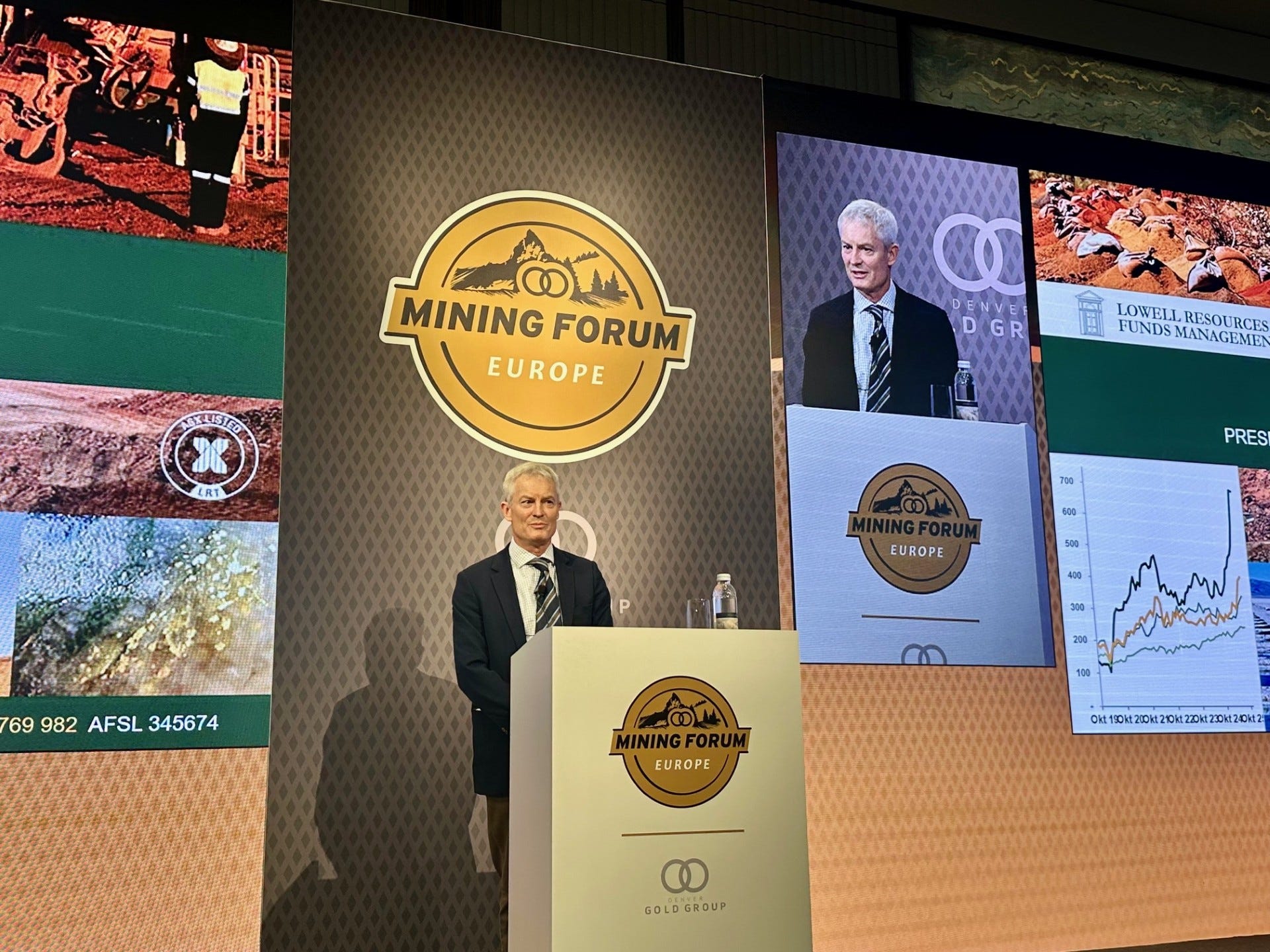
The long-running battle between the ASX and the TSX has taken another turn.
The ASX has outperformed the TSX for many years, prompting a flood of companies to dual list in Australia, including Orezone Gold Corporation (TSX/ASX: ORE) and Capstone Copper (TSX: CS/ASX: CSC).
Delivering a keynote presentation at the Mining Forum Europe in Zürich on Wednesday, Lowell Resources Fund (ASX: LRT) chief investment officer John Forwood referred to it as the battle of the bears – the Canadian brown bear versus the koala.
ASX-listed companies benefit from Australia’s massive pension sector – which is around 60% larger than Canada’s – while Canadian companies are able to raise money through the country’s flow-through share scheme.
The main difference between ASX and TSX-listed miners was the number of shares on issue, which Forwood referred to as the spendthrifts versus the misers.
“The Aussies are the spendthrifts, and they’re very profitable, you could say, with their share capital versus the misers up in Toronto, who are much more careful with their share capital,” he said.
Forwood did a peer comparison of 20 ASX-listed intermediate gold producers and 20 TSX-listed producers.
The Canadian companies had an average of 271 million shares on issue, while the Australians had an average of 1.85 billion.
“That relatively same group of companies in Australia has issued seven times more shares than their Canadian counterparts,” Forwood said.
“You might say, so what? But actually, I think it’s quite important.”
One of the reasons relates to board remuneration.
According to Lowell, ASX board non-executive directors are paid A$60,000-120,000 in cash, but total compensation could be up to A$80,000-200,000 when accounting for equity, depending on the size and stage of the company.
Canadian directors are paid an average of C$15,000-40,000 in cash and C$25,000-80,000 with equity, including options and warrants.
“I think perhaps, one of the reasons for that is that Australian share registers and companies are much more visible,” Forwood said.
“If a director sells some shares of an Aussie company, it has to be announced straight away, and it’s a big black mark against that company in terms of seeing insiders start to sell.”
Lowell is invested in TSX-listed companies, but Forwood said many seemed to be less aware of who was on their share register.
“They don’t know who their shareholders are, so I think that might be a little bit of a factor in that compensation difference,” he said.
Forwood said during a downturn, like brown bears, Canadians were much better at hibernating.
“I was talking to a Canadian company last week, and they said, ‘our annual costs if we stand still and do nothing and go into hibernation are only C$100,000 a year’,” he said.
“Whereas in Australia, I’m on a couple of junior boards, and it’s very, very difficult to get away with an annual cost – even if you’re doing nothing – of less than A$1 million, so in downturns, Aussies have to raise more capital.”
Forwood added that Australians typically raised equity, while Canadians were more likely to finance at the project level via royalty and streaming deals.
TSX junior interest up in smoke
The TSX mining space underperformed the ASX from 2016-18 as money in Canada diverted into marijuana stocks.
“A lot of speculative capital got pulled into pot stocks in Canada, and a lot of it got torched,” Forwood said.
“I think there’s been a long hangover from that in terms of the junior mining sector in particular.”
During the pandemic, interest rates were slashed to zero and both markets performed strongly.
There were 106 new mining listings on the ASX in 2021 alone.
“I think there was only something like less than 20 on the TSXV,” Forwood said.
“So that indicates to me that there was still quite a hangover from the pot stock boom in Canada.”
The period from 2022-24 was weak for both markets, but Toronto drastically underperformed Australia, with roughly twice as much equity being raised on the ASX.
“I was in North America two years ago, and at least two people said to me, ‘the Canadian junior mining market is never coming back’,” Forwood said.
“So that was capitulation, but that was actually music to my ears. I thought, ‘okay, we must be near the bottom here’.”
From February 2025, the market turned around again in both jurisdictions.
“Both markets took off, but the Canadian market did a lot better and caught right up to the Aussie market over that period,” Forwood said.
“But why did the Canadian market do better last year than the Aussie market? I think some of it comes back to the issued share capital.”
Canada also caught up to Australia in 2025 on equity raisings and Forwood said he wouldn’t be surprised if the TSX had outperformed the ASX so far this year.
Out of hibernation
Forwood looked at all the companies with 2026 forecast gold production of 175,000-725,000 ounces, representing 13 TSX miners and 10 ASX companies.
What he discovered surprised him.
In April 2025, enterprise value per production ounce for TSX miners was US$9868 an ounce versus US$6973/oz for the ASX group.
A year later, the TSX average is US$22,291/oz, while the ASX average is just US$12,089/oz.
“The uplift on the TSX has been 2.3 times. On the ASX, it’s only been 1.7 times, so a lot more money, a lot more interest flowing into Canada,” Forwood said.
“And I think that there’s just less shares outstanding and when things boom, it’s the fire hose thing. You’ve just got to try and get as much through a smaller nozzle than the open nozzle in Australia.”
On an EV to resource ounce basis, the TSX group averaged US$395/oz a year ago versus US$252/oz for the ASX. A year later, the TSX averaged US$768/oz, while the ASX group averaged US$320/oz.
“Canada definitely has much higher value than Australia at the moment, and has improved a lot more, up 1.9 times in the last 12 months, versus up 1.3 times in Australia,” Forwood said.
He added that it was a good time for Canadian companies to make scrip acquisitions, while Australians had a lot of cash.
“There’s a lot of pre-development companies in Australia which are trading at 0.1 of their P/NAV or something like that, so you can use your cash and translate a project into a 10-bagger,” he said.
“I think we’re going to see more and more M&A as a result of this cycle.”
So, who wins? The brown bear or the koala?
“I think 2025 was the year when the Canadian bear came out of hibernation, and the fact is that Canadian companies can hibernate a lot better,” Forwood said.
“The koala – it’s not even a bear, it doesn’t hibernate, and that perhaps reflects the activity through the cycle of Aussie explorers in particular.”