
Plenty of Opportunities in ‘Whippy’ Gold Market
Aussie companies suggest market is being spooked by high capex

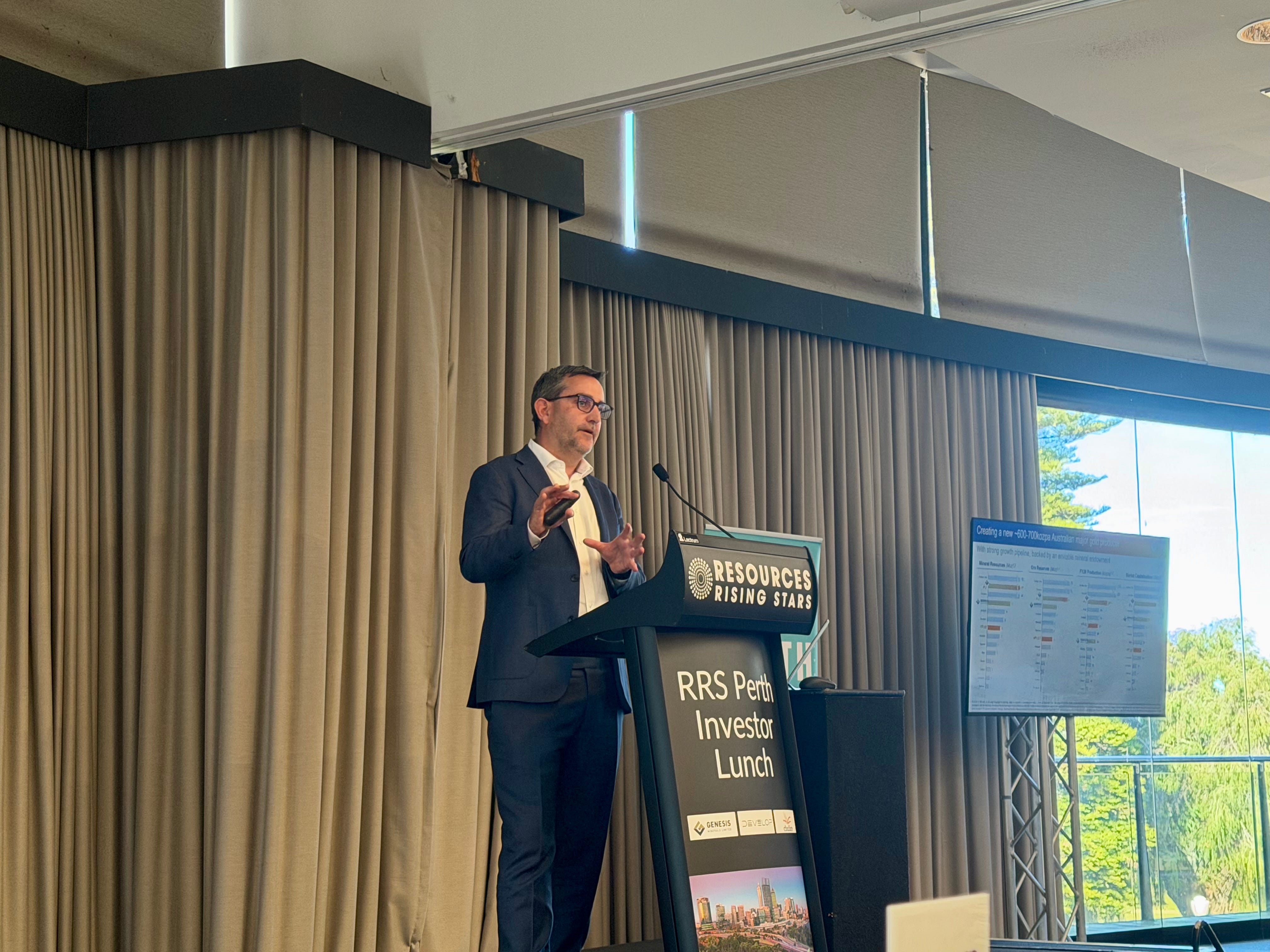
Genesis Minerals (ASX: GMD) executive chairman Raleigh Finlayson says while the gold market is volatile, there is good value in gold stocks.
“The market’s very whippy at the moment,” he told a lunch in Perth last week.
Genesis shares are down by almost 30% from the January peak, despite the company delivering its two best-ever quarters so far this year.
“It shows the jitteriness around the sentiment in the market, particularly around companies that are cum-capex,” Finlayson said.
He added that a key driver of Genesis’ proposed merger with Vault Minerals (ASX: VAU) was reducing capex spend by eliminating the need to build the Tower Hill plant.
Ora Banda Mining (ASX: OBM) CEO Luke Creagh said gold was still the best place to be.
“You’ve got phenomenally high gold prices and everyone’s making good money,” he said.
“I think the issue is the investors, with global uncertainty on everything, are jittery, so it depends on what their investment thesis is to when to deploy and how to deploy it.”
Creagh said it was fine for producers as regardless of share prices, they would continue to build cash, but it was tougher for explorers and developers.
“My prediction is that might shape the next part of the M&A story, because the mid-tiers have a lot of cash, and assets are getting drilled out that look okay.”
Finlayson said it was difficult to pick the bottom of the market.
“But I think there’s a significant amount of opportunity in the resources space in general, but particularly in the gold space, because the gold price is still very strong – close to A$6000 Aussie – and yet sentiment is very whippy.”
Capex rising
Finlayson said one of Genesis’ peers, Ramelius Resources (ASX: RMS), looked oversold, with the stock down about 40% since January.
“They’re getting hammered in the market at the moment because they have capital ahead of them,” he said.
Ramelius managing director Mark Zeptner agreed that the stock was oversold.
“We do have capital, but so does a lot of peers,” he said on the sidelines of the Diggers & Dealers Mining Forum in Kalgoorlie on Tuesday.
“We’re not alone, but we seem to be getting crunched harder.”
Ramelius expects to go from 192,000 ounces of gold production in the 2026 financial year to 525,000oz per year from 2030, with mill capacity rising from 2 million tonnes per annum to 7.5Mtpa over that period by expanding its Mt Magnet mill and building the greenfields Rebecca-Roe project.
The company expects all-in sustaining costs to drop from A$1983 an ounce in FY26 to A$1890/oz beyond 2030, well below the peer group average of around A$2400-2500/oz.
“Whilst costs have gone up, we’re still going to be at a cost advantage to our peer group, and that’s not recognised either,” Zeptner said.
“We’re doing everything we can to try to realise that value.”
ASX gold leaders at the conference this week suggested the higher capex outlooks were an overhang on the sector.
Zeptner said Ramelius had built an owner’s team to execute on its growth plans, which also gave it an advantage over its peers.
He estimated that up to 10 gold plants were being built or expanded in Western Australia, putting timelines and a tight labour market under further pressure.
“I’ve never seen anything like it. Normally, in one year, you probably see two to three gold plants get built,” he said.
“That’s not even going outside the gold industry – it’s huge.”
Zeptner said delivery would be an important factor in winning over investors.
“People need to see it before they buy it,” he said.
“Unfortunately, part of our job is to convince people to get in now rather than on the way out.”
Keeping the faith
While geopolitical and economic uncertainty remains high, gold companies remain bullish on the outlook for the price.
“I think gold’s been attractive for 5500 years, so I don’t think one year’s worth of gold price volatility is going to change that,” Minerals 260 (ASX: MI6) managing director Luke McFadyen said.
“I think if you look at the size of gold – it’s a trillion-dollar market – so the volatility is just natural.”
McFadyen suggested a short-term period of volatility didn’t change the long-term outlook.
“When you’ve got a 20-year project like Bullabulling, it’s probably going to see five or six different price cycles from peak to trough, so you don’t ignore it, but you don’t let it distract you from the bigger picture either.”
Most banks are still positive on gold, including Citi, which on Monday said its base case was for gold to stagnate to even decline over the next month before rallying to US$4500/oz in the December quarter and to US$5000/oz by the first half of 2027.
Its bear case (20% probability) sees gold falling to as low as US$3600/oz in the current quarter before recovering to US$4000/oz next year, while its bull case (20% probability) sees it rebounding to US$5000/oz next quarter on a quick Strait of Hormuz resolution and the US Federal Reserve turning much more dovish than market expectation.
Greatland Resources (ASX/LSE: GGP) managing director Shaun Day said the pullback was likely temporary due to the Iran War.
“I think that’s best explained to my mind by saying there is firstly a bit of a flight to US dollars, but also a risk of 1970 oil shock-type inflation, which means that people want to be in US dollars that provide an interest rate yield as opposed to gold,” he said.
“I don’t think the Iran conflict has made the world more secure or more predictable or more comfortable, so I think gold probably has a really good run out of that.
“Although gold feels lower in markets now than it did in November 2025, the price is the same – it just feels higher when it’s going up as opposed to when it’s come off.
“But the gold price is still exceptional, and I think if this is as tough as it gets, the sector’s in an incredibly strong place.”